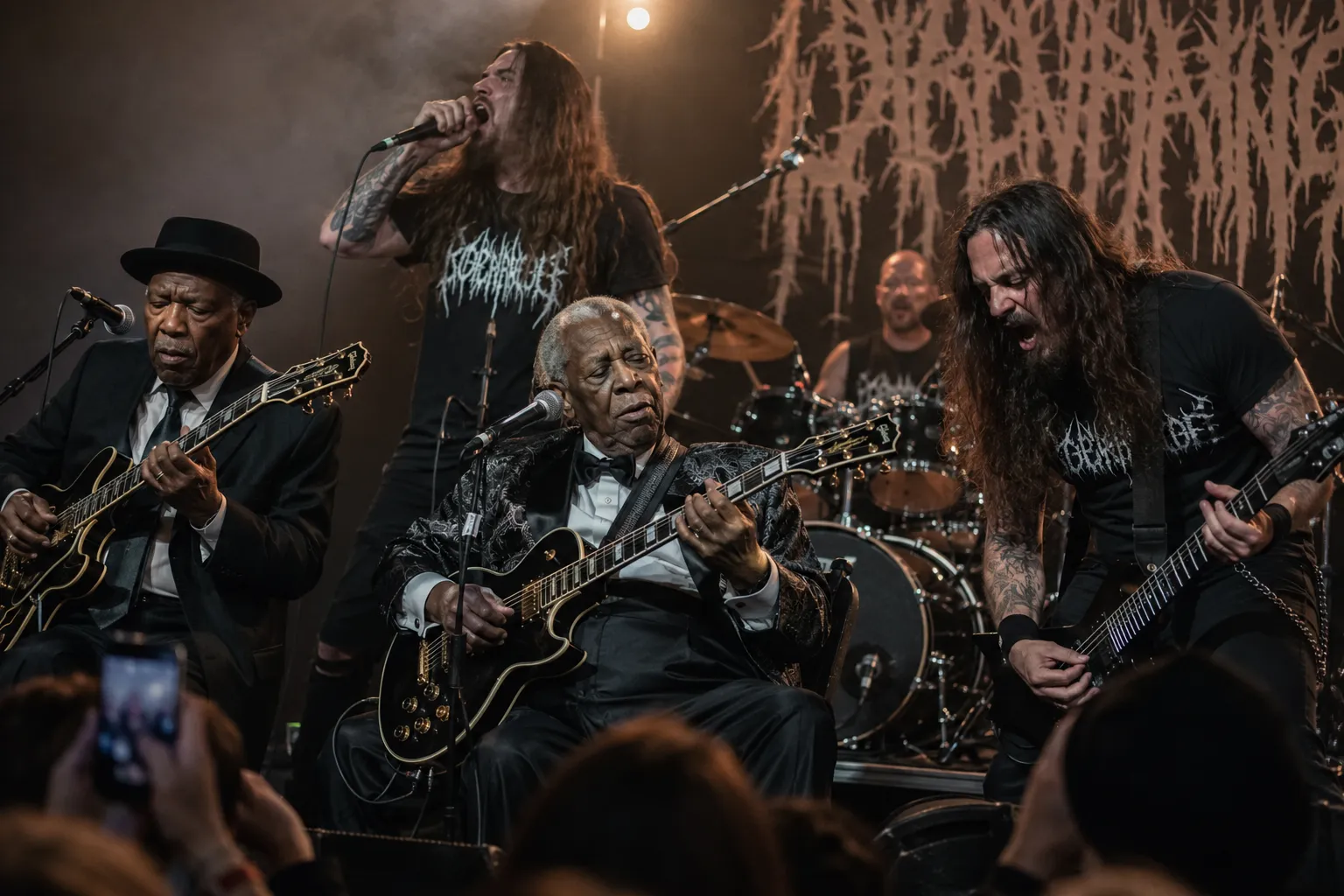
From the Blues to Death Metal: How One Musical Family Tree Created Some of the Heaviest Music Ever Made
At first glance, blues music and death metal seem to have almost nothing in common.
One is often associated with smoky juke joints, emotional storytelling, and expressive guitar playing. The other is known for crushing distortion, blast beats, growling vocals, and some of the most aggressive sounds ever recorded.
Yet despite their differences, death metal's roots can be traced directly back to the blues.
The journey from Delta blues to death metal spans more than a century and includes rock and roll, hard rock, heavy metal, thrash metal, and countless musicians who pushed music into increasingly heavier territory.
Surprisingly, the DNA of death metal can still be heard in the earliest blues recordings.
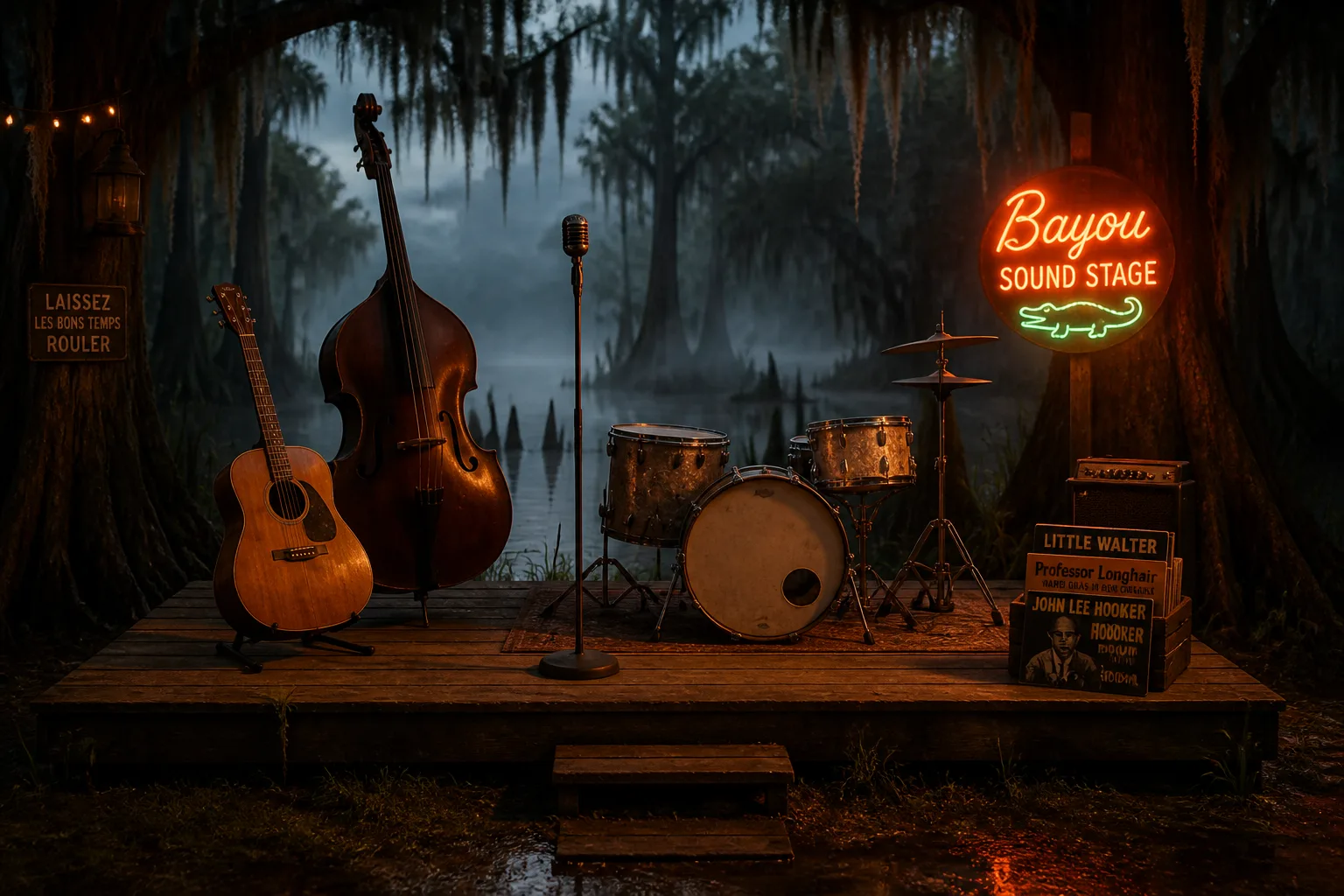
The story begins in the American South during the late nineteenth and early twentieth centuries. Blues music emerged from a mixture of African musical traditions, work songs, spirituals, field hollers, and folk music. Early blues artists such as Robert Johnson, Son House, Charley Patton, Blind Lemon Jefferson, and Lead Belly developed a style built around emotional expression, repetitive riffs, call-and-response patterns, and distinctive guitar techniques.
One of the most important contributions of blues music was the guitar riff.
Long before heavy metal existed, blues musicians were creating memorable guitar patterns designed to drive songs forward. The use of repetition, tension, and powerful rhythmic grooves would eventually become a fundamental part of rock and metal music.
As recording technology improved and audiences expanded, blues music evolved into electric blues during the 1940s and 1950s. Artists such as Muddy Waters, Howlin' Wolf, Willie Dixon, and B.B. King amplified their instruments and created a louder, more aggressive sound. Electric guitars became central to the music.
This change would prove revolutionary.
Young musicians across America and Britain became fascinated by these sounds.
One of those new styles became rock and roll.
Artists such as Chuck Berry, Little Richard, Jerry Lee Lewis, and Elvis Presley took the energy of blues music and combined it with country, gospel, and rhythm and blues. Chuck Berry in particular played a crucial role in the development of rock guitar. His riffs, solos, and stage presence helped establish many of the techniques that future rock and metal guitarists would adopt.
By the 1960s, British musicians became obsessed with American blues records. Bands such as The Rolling Stones, The Yardbirds, Cream, Fleetwood Mac, and Led Zeppelin openly borrowed from blues traditions while adding greater volume and experimentation.
Among these groups, Led Zeppelin became especially important.
Jimmy Page's guitar work combined blues scales with heavier amplification, darker tones, and more aggressive riffs. Songs such as "Whole Lotta Love," "Communication Breakdown," and "Dazed and Confused" pushed rock toward what would eventually become heavy metal.
At roughly the same time, another band was taking things even further.
Black Sabbath emerged in Birmingham, England, during the late 1960s. Guitarist Tony Iommi transformed blues-based guitar playing into something darker and heavier. While many early Black Sabbath songs still contained obvious blues influences, the band's slower tempos, ominous riffs, and darker lyrical themes created a blueprint for heavy metal.
Many music historians consider Black Sabbath the first true heavy metal band.
Without them, death metal likely never exists.
Throughout the 1970s, heavy metal continued evolving through bands such as Judas Priest, Deep Purple, Rainbow, Motörhead, and Scorpions. Amplifiers became louder. Distortion increased. Guitar techniques grew more advanced.
Then came the New Wave of British Heavy Metal.
Bands such as Iron Maiden, Saxon, Diamond Head, and Def Leppard accelerated the pace and technical complexity of metal music. Faster riffs and more aggressive performances laid the groundwork for the next major evolution.
That evolution arrived during the early 1980s.
Thrash metal combined the speed of punk rock with the power of traditional heavy metal. Metallica, Slayer, Megadeth, Anthrax, Exodus, Testament, and Kreator created music that was faster, heavier, and more aggressive than anything that came before.
Slayer in particular would become one of the most important stepping stones toward death metal.
Albums such as Reign in Blood demonstrated how extreme metal could become while still retaining recognizable song structures.
Young musicians around the world took notice.
Soon they began pushing the boundaries even further.
During the mid-1980s, bands such as Possessed and Death began developing a sound that moved beyond thrash metal. Distortion became thicker. Drumming became faster. Vocals became harsher.
The result became known as death metal.
Chuck Schuldiner's band Death is often credited as one of the genre's founders. Albums such as Scream Bloody Gore, Leprosy, and Human helped establish many of death metal's defining characteristics.
Meanwhile, bands such as Morbid Angel, Obituary, Deicide, Cannibal Corpse, Entombed, Carcass, and Suffocation expanded the genre in different directions.
By the 1990s, death metal had become a global movement.
Although death metal sounds dramatically different from traditional blues music, musicians often point out that the connection remains surprisingly strong.
The heavy guitar riff remains central.
The use of pentatonic scales can still be heard.
Improvisation and soloing remain important.
Many metal guitarists continue using techniques originally developed by blues musicians decades earlier.
Even emotional expression connects the genres.
Blues musicians used music to communicate pain, struggle, fear, loss, and personal experiences. Death metal often explores darker themes, but the underlying desire to express powerful emotions remains similar.
The path from Robert Johnson to Cannibal Corpse may seem unlikely.
Yet when viewed as a musical family tree, the connection becomes clear.
Blues created electric blues.
Electric blues helped create rock and roll.
Rock and roll evolved into hard rock.
Hard rock became heavy metal.
Heavy metal gave rise to thrash metal.
Thrash metal eventually produced death metal.
Each generation added new ideas while building upon the foundation established by the musicians who came before.
More than a century after the blues first emerged, its influence can still be heard in some of the heaviest music ever recorded.
The distortion may be louder.
The drums may be faster.
The vocals may be harsher.
But deep beneath the surface, death metal still carries a piece of the blues.