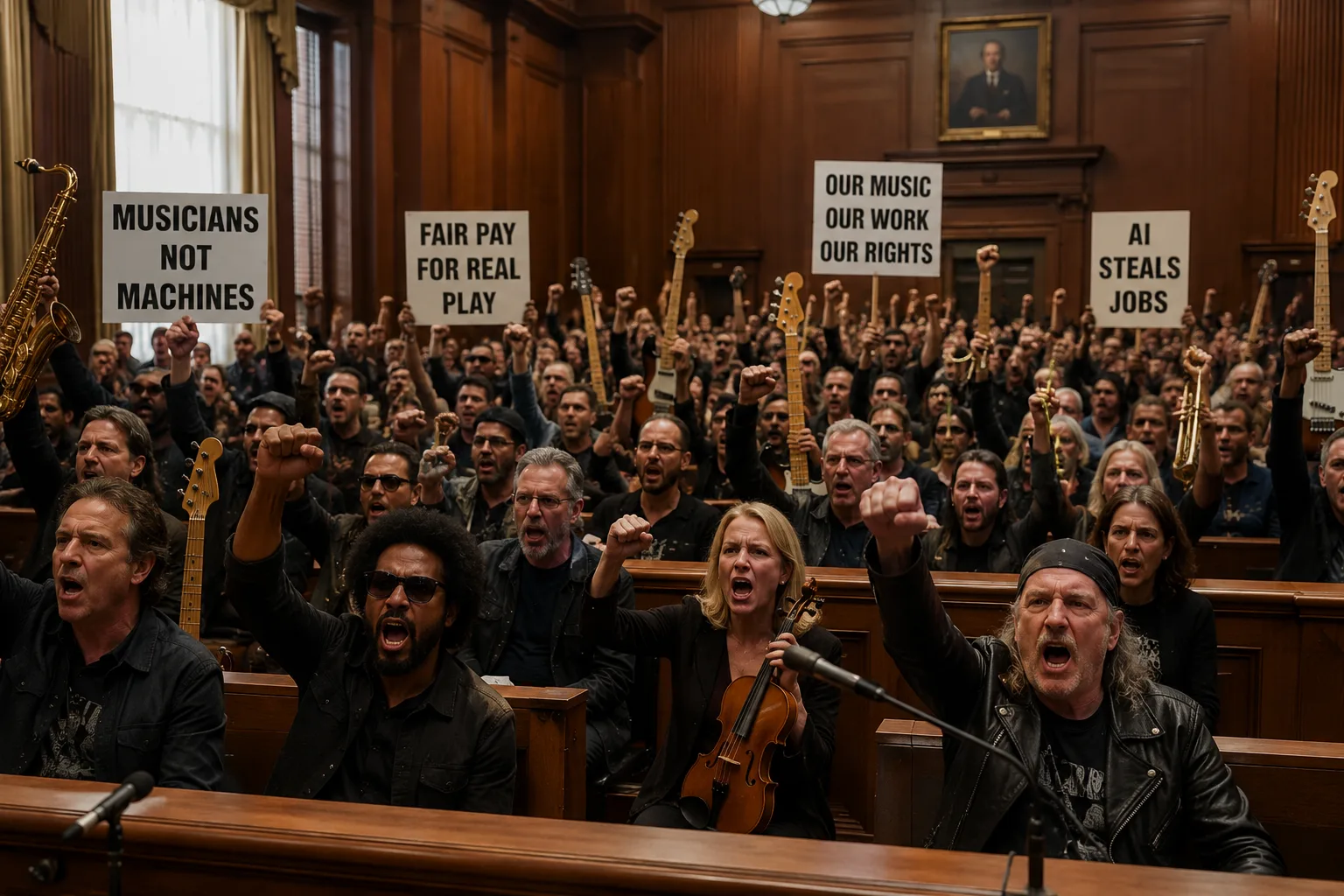
American Federation of Musicians Sues Universal and Warner Over AI Licensing Deals
The American Federation of Musicians (AFM) has filed a federal lawsuit against Universal Music Group and Warner Music Group, alleging the two music giants violated their collective bargaining agreement by licensing recordings featuring union musicians to artificial intelligence companies without providing compensation or transparency to the performers involved.
The lawsuit, filed June 5 in Manhattan federal court, centers on agreements involving AI music companies Suno and Udio. According to the AFM, the labels licensed recordings containing performances by union musicians as part of settlements and licensing arrangements with the AI firms, but failed to share proceeds or identify which recordings and musicians were involved. The union argues that these agreements constitute "new uses" of recordings under its labor contracts, triggering compensation obligations to affected musicians.
"The AFM brings this lawsuit because defendants, two of the largest music companies in the world, have licensed sound recordings on which AFM-represented musicians have worked, without compensation or credit, to two AI companies," the complaint states. The union further alleges that Universal and Warner have refused to provide information regarding which recordings were licensed and which musicians' performances were used in connection with AI training.
The dispute emerges from one of the music industry's most significant battles over artificial intelligence. In 2024, Universal, Warner, and Sony Music joined lawsuits against Suno and Udio, accusing the AI companies of training their systems using copyrighted recordings without authorization. The record companies argued that the AI platforms copied music on a massive scale to build products capable of generating songs that could compete with human-created recordings.
Since then, parts of the legal landscape have shifted. Universal and Warner reached various settlement and licensing arrangements with Udio, while Warner also entered into a broader licensing partnership with Suno. These deals were promoted as frameworks that would allow licensed AI development while providing compensation and control mechanisms for artists and rights holders.
The AFM, however, argues that session musicians and instrumental performers have been left out of those arrangements. The union contends that while labels negotiated new revenue opportunities connected to AI training and future AI-powered music products, the musicians whose performances appear on the original recordings have not received compensation or recognition. The lawsuit seeks damages and a court declaration that the labels violated their contractual obligations.
Universal Music Group pushed back on the allegations, stating that it has worked to protect artists' interests during the rise of generative AI and maintains a strong relationship with the AFM. Warner Music Group similarly expressed disappointment with the lawsuit and indicated that negotiations with the union remain ongoing. Both companies have suggested the dispute should be resolved through collective bargaining discussions rather than litigation.
The case could become an important test of how traditional labor agreements apply to artificial intelligence. While much of the industry's AI debate has focused on copyright ownership and licensing rights, the AFM's lawsuit highlights a different question: whether musicians who performed on recordings used to train AI systems are entitled to compensation under existing union contracts.
As generative AI continues reshaping the music business, the outcome may influence how future licensing deals are structured—not only for labels and AI companies, but also for the thousands of session musicians whose performances form part of the industry's recorded history.