Dmitri Golovko’s War Machine Score Emerges as a Standout Element of Netflix’s Global Hit
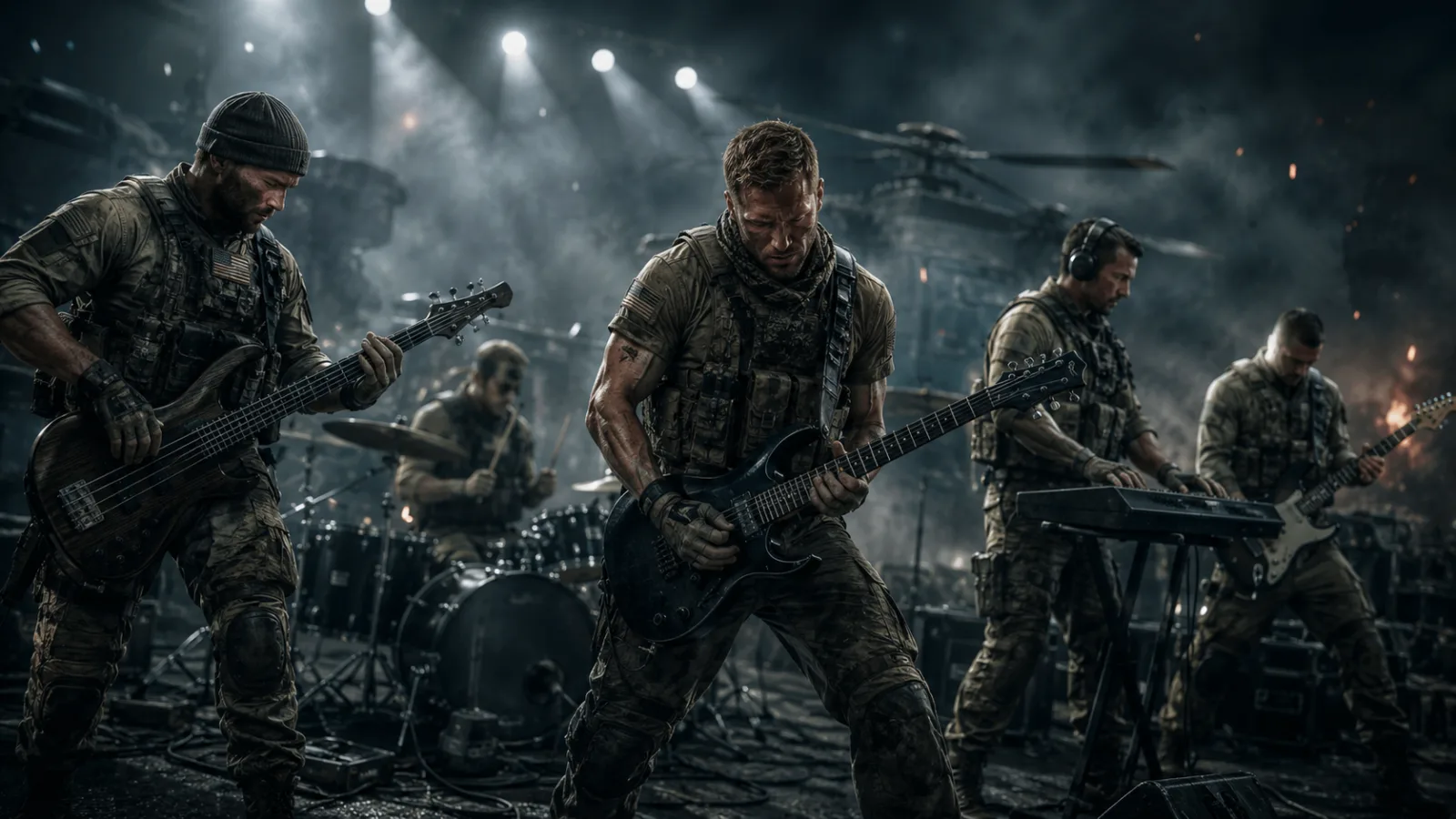
As Netflix's War Machine continues its remarkable run with audiences worldwide, the film's soundtrack is gaining increasing attention from viewers looking to revisit the movie's most intense and emotional moments. While much of the discussion surrounding the blockbuster has focused on its action sequences, cast, and streaming success, composer Dmitri Golovko's original score has quietly become one of the production's most compelling achievements.
The success of War Machine has been impossible to ignore. The film recently climbed into Netflix's all-time Top 10 rankings after spending weeks at the top of the platform's charts, further cementing its status as one of the streaming giant's biggest original releases. Readers can learn more about the film's historic performance in ArtistDirect's coverage: Alan Ritchson's War Machine Reaches Netflix's 9th-Place All-Time Rank After Weeks at #1.
For composer Dmitri Golovko, the project presented an opportunity to create a soundtrack capable of matching the film's relentless pace while still delivering emotional depth. The resulting score spans more than an hour of music and features a wide range of themes that help drive the narrative forward.
The opening portions of the soundtrack establish an atmosphere of uncertainty and tension through pieces such as "Convoy," "The Promise," and "81." Rather than relying solely on traditional military motifs, Golovko blends modern cinematic sound design with orchestral elements to create a soundscape that feels both futuristic and grounded.
As the story intensifies, tracks including "Approaching Target," "First Contact," "Massacre," and "We Need Comms" inject urgency into key moments. Pulsing rhythms, layered textures, and escalating arrangements mirror the pressure faced by the film's characters, helping viewers feel immersed in the action.
Several compositions stand out for their ability to balance suspense with emotion. "River Crossing," "Waterfall," and "I Never Made It Back to Base" introduce quieter moments that provide contrast to the film's larger set pieces. These tracks demonstrate Golovko's understanding that effective film scoring is often about knowing when to step back as much as when to push forward.
The latter portion of the soundtrack raises the stakes even further. Tracks such as "Relentless Pursuit," "Aftermath," "Death March," and "What Would Your Brother Do?" build toward the film's climactic sequences while maintaining a strong thematic identity. Rather than feeling like disconnected action cues, the compositions work together to create a cohesive musical journey.
One of the score's most notable pieces is "Machina Dei Mortis," a dramatic composition whose title alone hints at the larger themes explored throughout the film. The track combines dark orchestral elements with modern cinematic production techniques, resulting in one of the soundtrack's most memorable moments.
The score ultimately concludes with "The Finish Line" and the nearly eight-minute title track "War Machine," allowing Golovko to fully develop many of the themes introduced earlier in the film. These closing compositions serve as both a culmination of the soundtrack and a reminder of how integral music can be to modern blockbuster storytelling.
As War Machine continues attracting viewers around the globe, the soundtrack is finding an audience of its own among film music enthusiasts and soundtrack collectors. The growing popularity of individual tracks online suggests that audiences are increasingly recognizing the role Golovko's work played in helping shape the film's atmosphere and emotional impact.
The continued success of War Machine has also brought renewed attention to the broader creative team behind the production. More information about the film, its cast, and its ongoing success can be found at ArtistDirect.com, which has extensively covered the movie's rise through the Netflix rankings.
For many viewers, War Machine delivered explosive action and high-stakes storytelling. For soundtrack fans, however, Dmitri Golovko's score may ultimately be remembered as one of the film's most enduring achievements.