Live Nation Pushes Back as ‘Blue Dot Fever’ Debate Intensifies
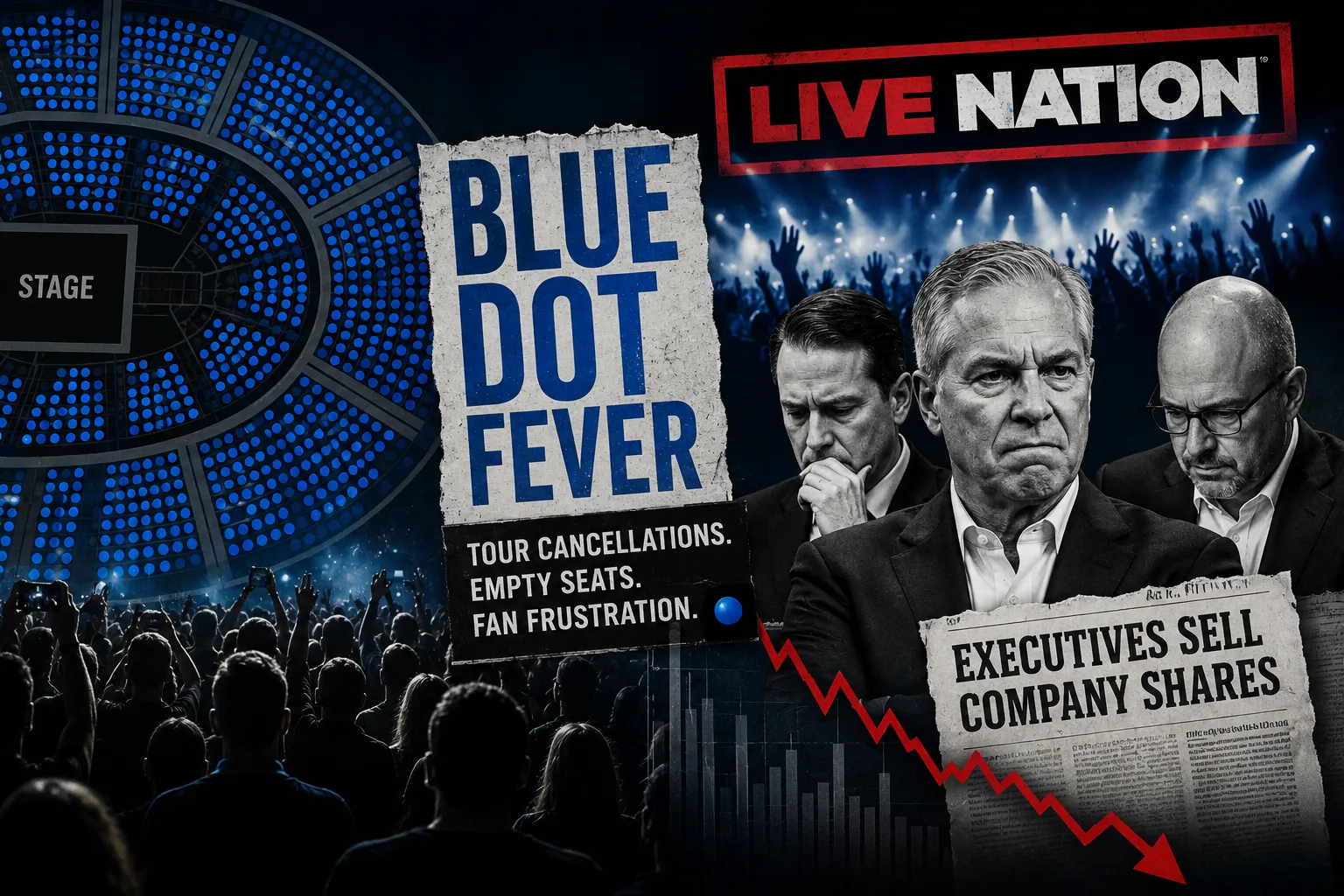
A growing phrase circulating throughout the live music business is putting new attention on concert economics, ticket demand, and the modern touring model. The term “Blue Dot Fever” — a nickname referring to the blue seat indicators that appear on Ticketmaster maps showing unsold tickets — has quickly become one of the most discussed topics in music industry circles. What started as online chatter has now evolved into a larger debate involving canceled tours, fan affordability concerns, and public responses from some of the industry's biggest executives.
The discussion gained momentum after multiple artists either canceled or postponed tour dates amid questions surrounding ticket demand. Names frequently tied to the conversation include Meghan Trainor, Zayn Malik, Post Malone, Jelly Roll, and the Pussycat Dolls. While several artists publicly cited scheduling, personal, or creative reasons for changes, industry observers increasingly pointed toward softer ticket sales and visible seating availability as contributing concerns.
As the phrase spread across social media and entertainment publications, Live Nation executives moved quickly to challenge the narrative. CEO Michael Rapino publicly responded to criticism online and pushed back against claims suggesting broad weakness in concert demand. Rapino argued that ticket affordability efforts remain active and pointed to discounted summer concert initiatives as evidence that the company continues prioritizing accessible pricing options.
Live Nation leadership has also framed the phenomenon as more perception than reality. President and CFO Joe Berchtold described the “Blue Dot Fever” narrative as lacking supporting evidence and suggested much of the online conversation may be driven by ticket resellers frustrated by evolving pricing strategies. According to Berchtold, artists are becoming more sophisticated in pricing tours and limiting opportunities for secondary market profits.
The company backed those arguments with broader performance data. Live Nation reported first-quarter revenue of approximately $3.8 billion, a 12% year-over-year increase. Through the end of April, the company said it had sold more than 107 million tickets for upcoming events, representing an 11% increase compared with the previous year. Deferred revenue for future events also reportedly climbed to record levels.
Executives also highlighted cancellation statistics to argue that the broader touring ecosystem remains healthy. According to company leadership, cancellation rates continue tracking around historic norms, with roughly 100 cancellations expected among approximately 15,000 shows currently on sale. Live Nation stated that fewer than 1% of shows have been canceled and described 2026 as potentially becoming a record year for live event activity.
Still, critics inside and outside the industry believe the conversation reflects deeper structural concerns. Some music veterans argue artists increasingly jump from clubs directly into arenas or stadiums before building long-term demand across smaller venues. Others point toward rising touring costs, including transportation, staffing, and production expenses that have made touring increasingly difficult for mid-level artists.
Recent reporting has also noted increasing ticket prices across the industry. Average concert ticket prices have climbed significantly over recent years, while fans simultaneously face broader economic pressures. Analysts and industry observers have suggested that audience behavior may also be shifting, with some consumers prioritizing a handful of premium live experiences each year rather than attending multiple events.
Adding another layer to the discussion, attention intensified after disclosures showed several Live Nation executives—including Rapino and other senior leadership figures—sold company shares around the same period the “Blue Dot Fever” conversation intensified. Company sources characterized the transactions as routine financial activity and stated the sales were unrelated to broader industry narratives.
Whether Blue Dot Fever represents a temporary internet phrase or a warning sign for larger shifts in live music remains an open question. But as artists reconsider touring strategies and fans become increasingly vocal about pricing and value, the discussion appears to have moved beyond social media and into a broader conversation about the future of the concert business itself.