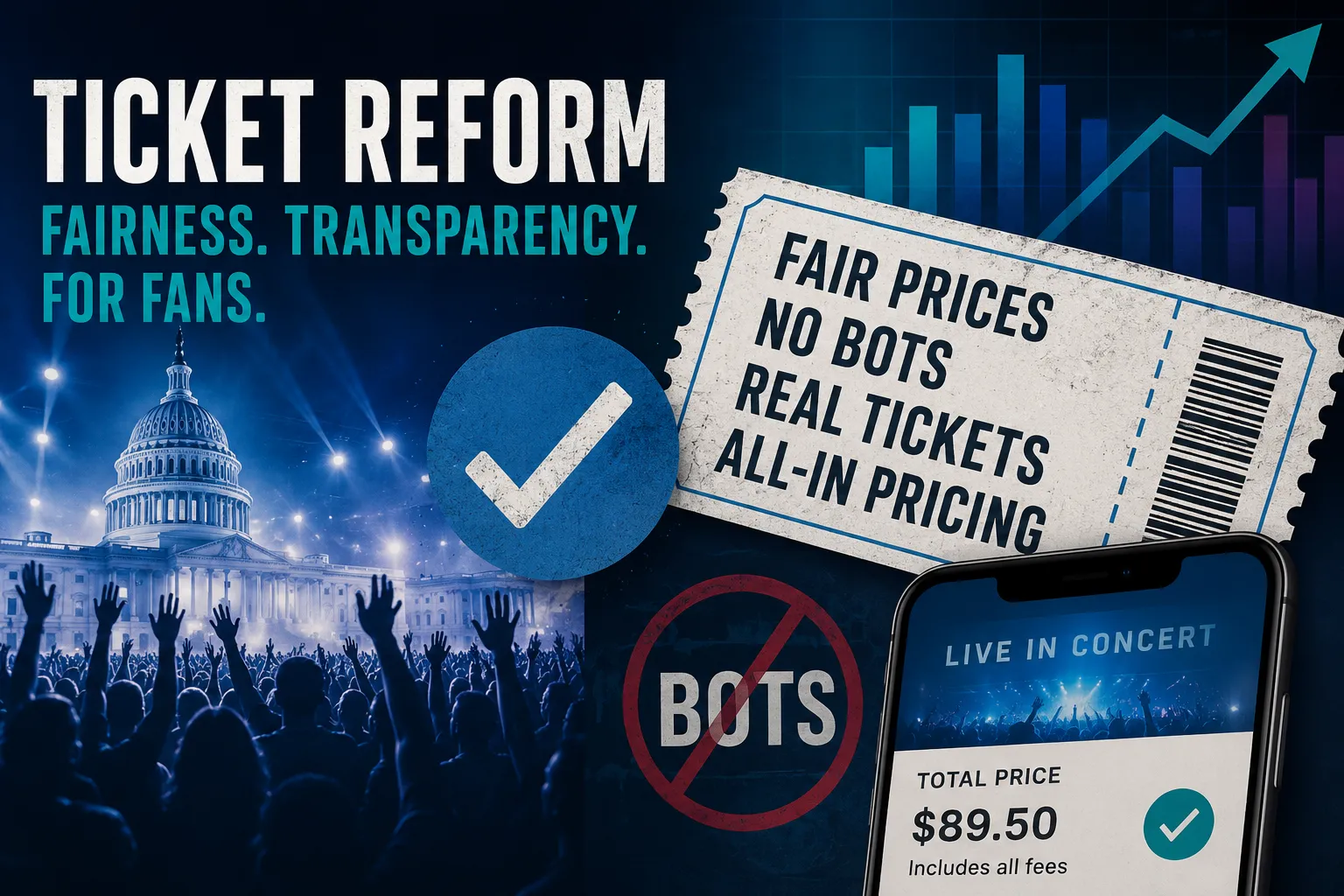
Voters Across Political Lines Back Major Concert Ticket Reform Efforts
A newly released national study commissioned by the Music Artists Coalition (MAC) suggests that frustration with the live event ticketing system may have become one of the few issues generating broad agreement across political lines. According to the survey, voters from both major parties overwhelmingly support reforms aimed at increasing transparency, limiting extreme resale markups, and cracking down on fraudulent ticket practices that many fans say have become commonplace.
The research, conducted by Breakwater Strategy on behalf of MAC, surveyed more than 800 registered voters nationwide and explored attitudes surrounding ticket pricing, resale restrictions, and consumer protections. The results suggest ticket reform is no longer simply a music industry issue—it has become a broader consumer concern affecting millions of Americans who attend concerts and live events.
Among the strongest findings, support for reform legislation itself reached overwhelming levels. Around 91% of respondents said they generally support legislation designed to improve fairness, transparency, and consumer protections in the ticketing industry. Support remained high across multiple states examined in the research, suggesting dissatisfaction extends well beyond regional markets or individual political groups.
Ticket bots emerged as one of the biggest frustrations among respondents. The survey found that 95% of voters considered preventing automated bots from purchasing large quantities of tickets an important issue. These automated systems have long faced criticism for allowing resellers to secure tickets before ordinary fans can complete purchases, often driving up secondary market prices almost immediately after sales begin.
The study also found major support for resale restrictions. Roughly 89% backed capping resale prices to limit excessive markups, while 78% supported an industry-wide cap restricting resale prices to 20% above original ticket values, excluding fees. Interestingly, many voters preferred even stricter limitations. Twenty percent supported eliminating markups entirely, while another 23% preferred resale increases of no more than 10%.
Transparency surrounding fees also generated major support. The concept of "all-in pricing"—requiring ticket sellers to show total costs including fees upfront—received support from 82% of respondents. Hidden charges added late in checkout processes have remained a frequent complaint among consumers for years, leading many lawmakers and advocacy groups to push for pricing reforms.
Speculative ticketing practices also faced heavy opposition. Approximately 82% supported banning the sale of tickets sellers do not actually possess at the time of listing. The practice has drawn criticism because brokers can sometimes advertise tickets before securing inventory, potentially creating confusion and risk for consumers.
Beyond policy preferences, the study suggested ticket reform could influence political outcomes. Seventy-five percent of respondents said they would be more likely to support elected officials advocating for stronger protections against fake or fraudulent tickets. Similarly, roughly 73% indicated increased support for candidates backing ticket bot restrictions and resale price caps.
Consumer experiences may help explain the growing pressure. According to survey findings, 10% of respondents reported being scammed while purchasing concert tickets. Others cited problems involving denied entry, invalid tickets, or difficulties obtaining refunds following canceled or rescheduled events. Fraud prevention ranked as voters' top legislative priority, outperforming even pricing concerns and resale restrictions.
The study arrives amid broader national scrutiny of the live entertainment industry. Concert ticketing practices have increasingly become a target for lawmakers, regulators, and advocacy organizations, particularly following controversies involving major tours and high-demand events. Groups like the Fix The Tix coalition and music industry organizations have continued urging Congress to strengthen consumer protections while addressing resale market practices.
Whether legislative action ultimately follows remains uncertain. But if the survey's findings hold, ticket reform appears to have crossed into unusual territory in American politics: an issue where fans, artists, and voters from opposing political backgrounds may actually agree.